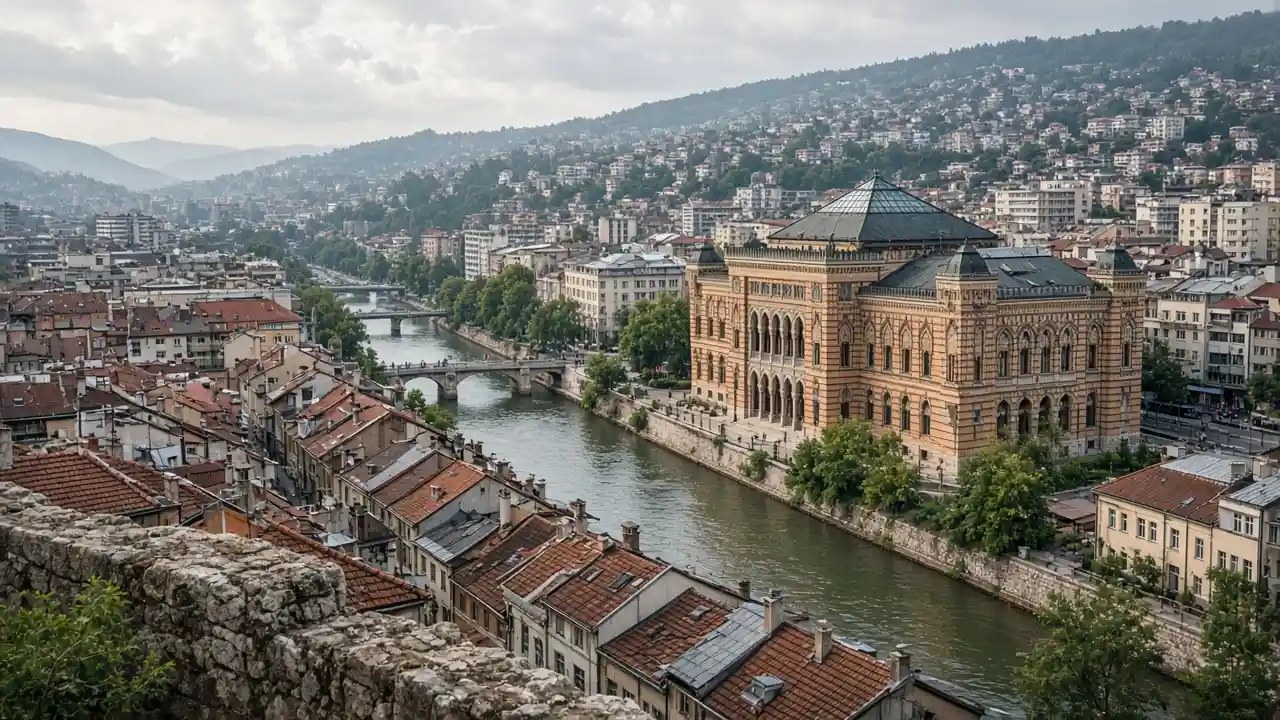
Move from shared spaces to domestic scale
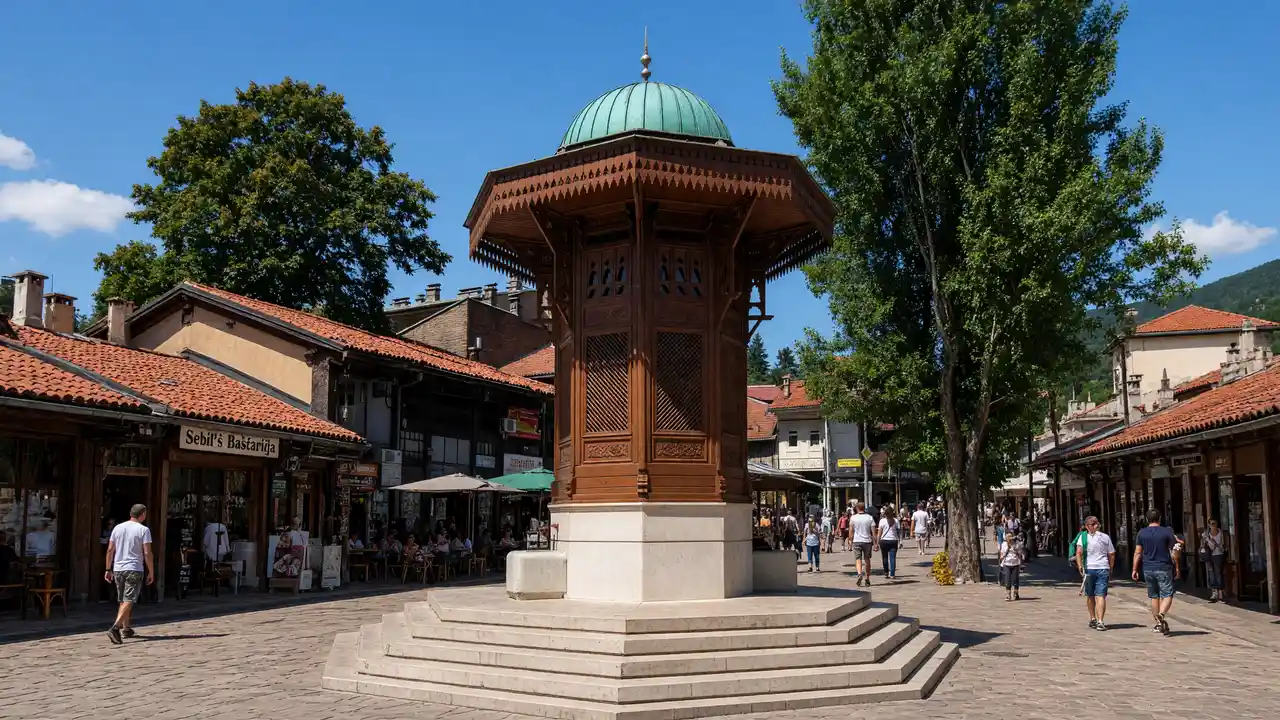
At Gazi Husrev-beg Mosque, look at the relationship between the main dome and the smaller surrounding forms. Move quietly around an active religious place and follow access rules. At Sebilj, change the viewpoint: the fountain helps organise the space around it, but step away from converging pedestrian flows before taking photographs
Beyond the Old Orthodox Church, the route heads towards Svrzo’s House. Notice how streets relate to doors, windows and courtyards along the way. An open gate is not necessarily an invitation; residential surroundings remain private. The historic house supplies a useful theme for observation, while a visit inside requires checking its own arrangements
Make time for a demanding subject
The War Childhood Museum presents personal objects and stories. A visit needs time for reading and a quiet break afterwards. It should not be treated as a quick stop between shops. Visits with children need an advance discussion of the exhibition’s subject and suitability
Streets north of the bazaar climb even between nearby stops. Map checks need a stationary position on uneven paving. The route was prepared remotely and does not confirm open entrances. Museum closures or limited time may mean ending the exterior walk and returning separately
Map and stops
The numbered markers match the stops below. A marker does not guarantee an open entrance
Access: Approach or exterior view; admission to the interior is not confirmed
Gazi Husrev-beg Mosque
A major domed Ottoman mosque with a courtyard in the heart of the old market
Check visiting rules and prayer times for access to the courtyard and mosque
Show on the city map ↗Sebilj Fountain
This wooden fountain pavilion is a familiar landmark on Baščaršija Square
Step to the edge of the square to see the pavilion and surrounding shops
Show on the city map ↗Old Orthodox Church
The Church of the Holy Archangels Michael and Gabriel forms a quiet historic ensemble beside the bazaar
Visiting the church museum requires additional time and a check of opening arrangements
Show on the city map ↗Svrzo’s House
This house museum presents an urban Muslim residence from the Ottoman period
The climb from the bazaar follows residential streets; plan a full house visit separately
Show on the city map ↗War Childhood Museum
Personal objects and testimonies tell the stories of childhood during war
Before visiting, check the lift’s availability: the museum publishes a separate notice
Show on the city map ↗
Before the walk
- A clear meeting point near Sebilj helps if members of a group briefly separate
- When photographing a residential street, avoid aiming into windows or private courtyards without permission
- Water and a rest before the museum leave time to recover from the climb
Check hours, tickets and access with each venue. Barriers may change the track and queues may add time. Accessibility has not been surveyed on site
Questions before the walk
Is a shorter walk around Baščaršija possible?
Stopping after the bazaar creates a shorter version. Svrzo’s House and the later museums are part of the continuation through residential streets
Is the whole walk about war?
No. It links religious landmarks, shared urban spaces and residential surroundings. Wartime childhood is the focus of a separate museum visit towards the finish
Sources and verification
Written by walkymap from remotely checked sources. No on-site walk is claimed
City of Sarajevo — Gazi Husrev-begova džamija ·
War Childhood Museum — Permanent Exhibition Sarajevo ·
© OpenStreetMap contributors · ODbL. Track geometry and distance are from the route dataset
Elevation estimate: Mapterhorn. Terrain model; stairs and small changes in level may be missed